
Want to Try Air Rifle – What’s Next?
Starting a new hobby is exciting, and we hope you find air rifle shooting as rewarding as we do!
We have two facilities in England – one in the South and one in the Midlands. Both are open throughout the week and welcome newcomers who want to try target shooting. Just give us a call to book!
You can also visit many of our clubs listed on our Club Finder. They provide a safe, relaxed environment with experienced shooters on hand to guide you. Many commercial ranges across the country also offer experience days, giving you the chance to try different target disciplines.

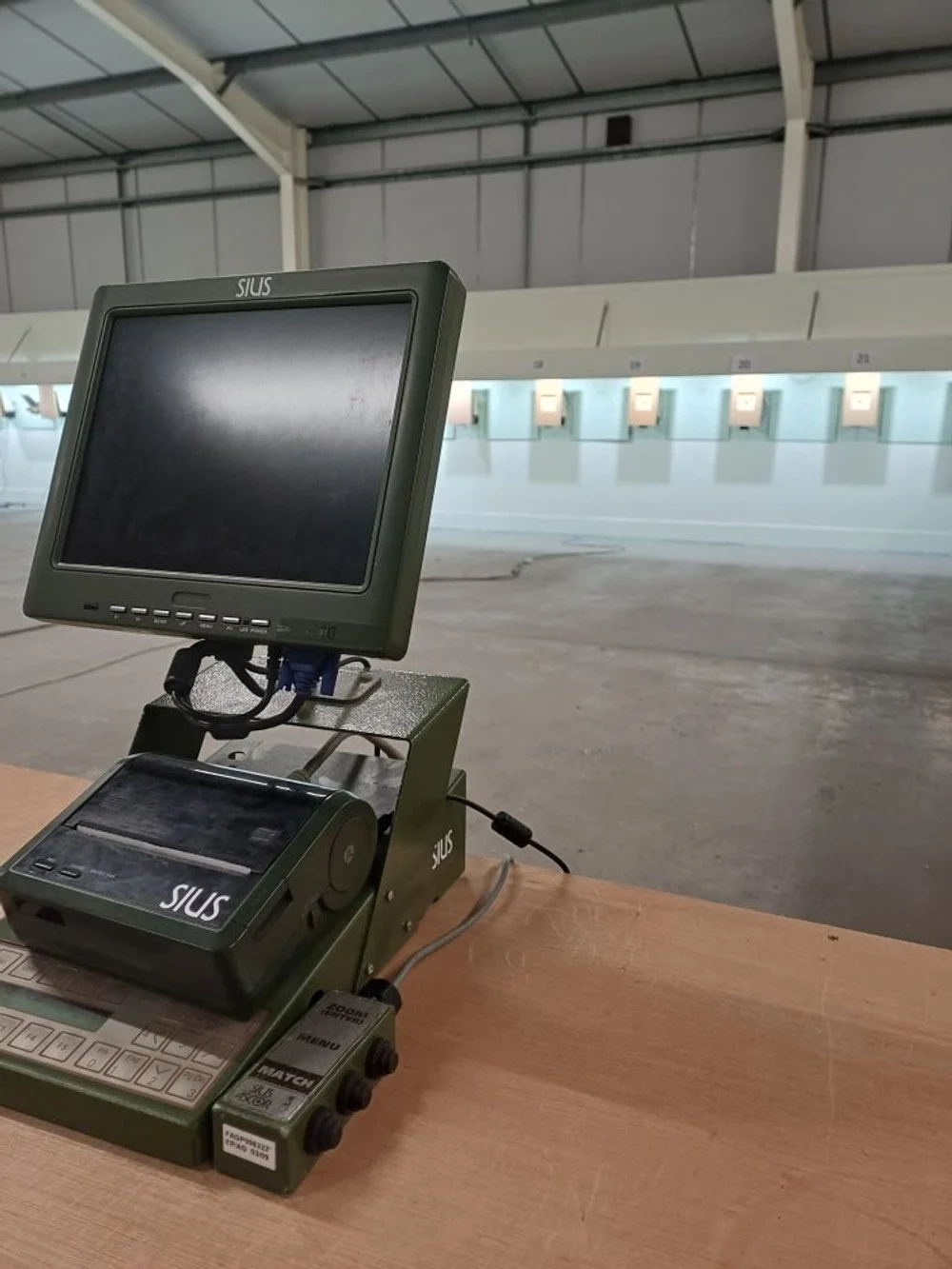
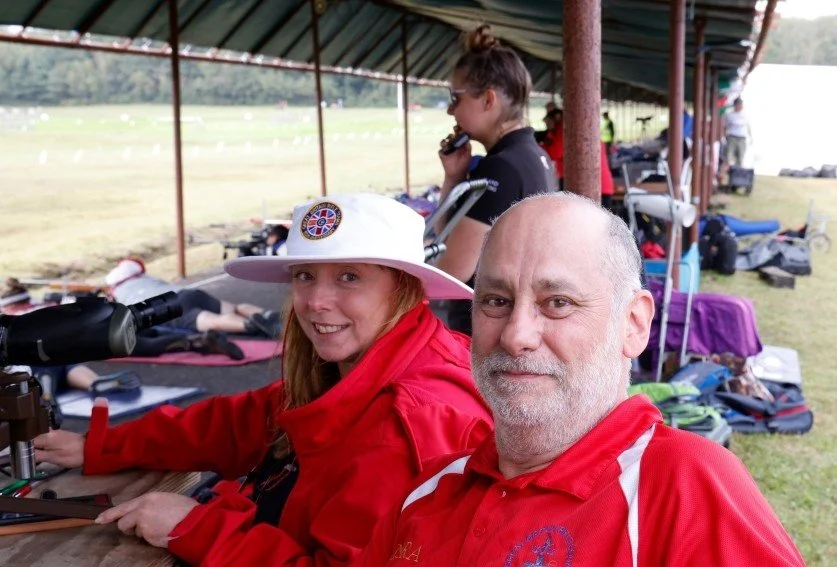
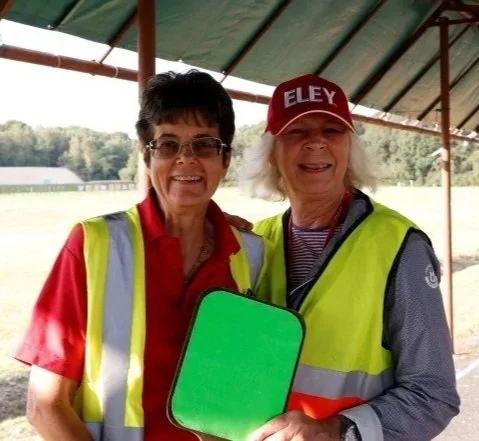
Our friendly clubs are run by volunteers passionate about the sport. Most clubs have a small amount of equipment available for beginners, so you don’t need to buy anything straight away. Many clubs run taster sessions and accept probationary members, making it easy to give the sport a go.
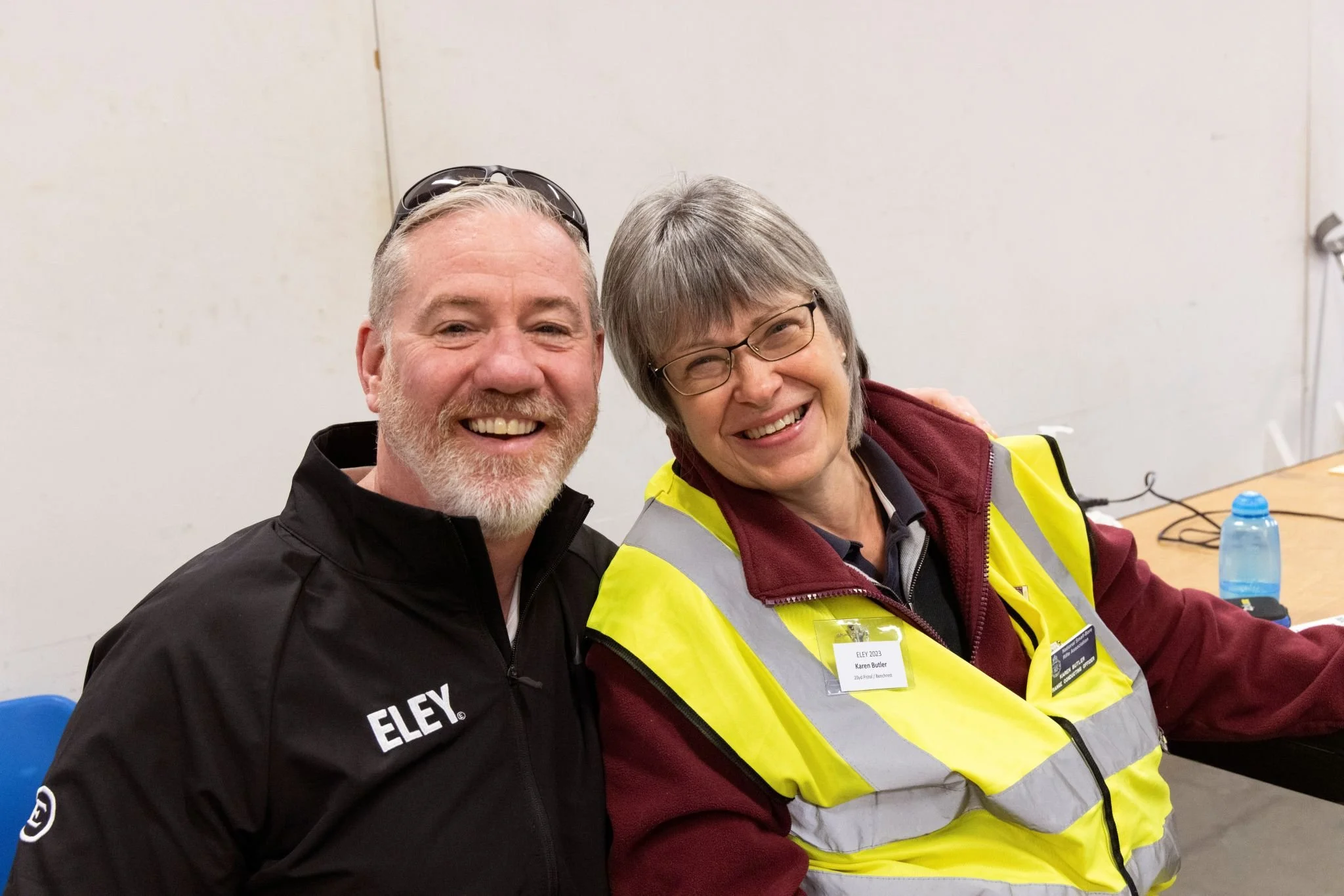
If you decide air rifle is for you, clubs may ask you to complete a short probationary period. During this time, you’ll show that you understand range safety and follow club rules. It’s not a difficult process – it’s simply there to keep the environment safe for everyone.
Why Air Rifle?
Air rifle is one of the most accessible forms of target shooting. There are two main types:
Sporter Rifle – requires minimal equipment and is great for beginners.
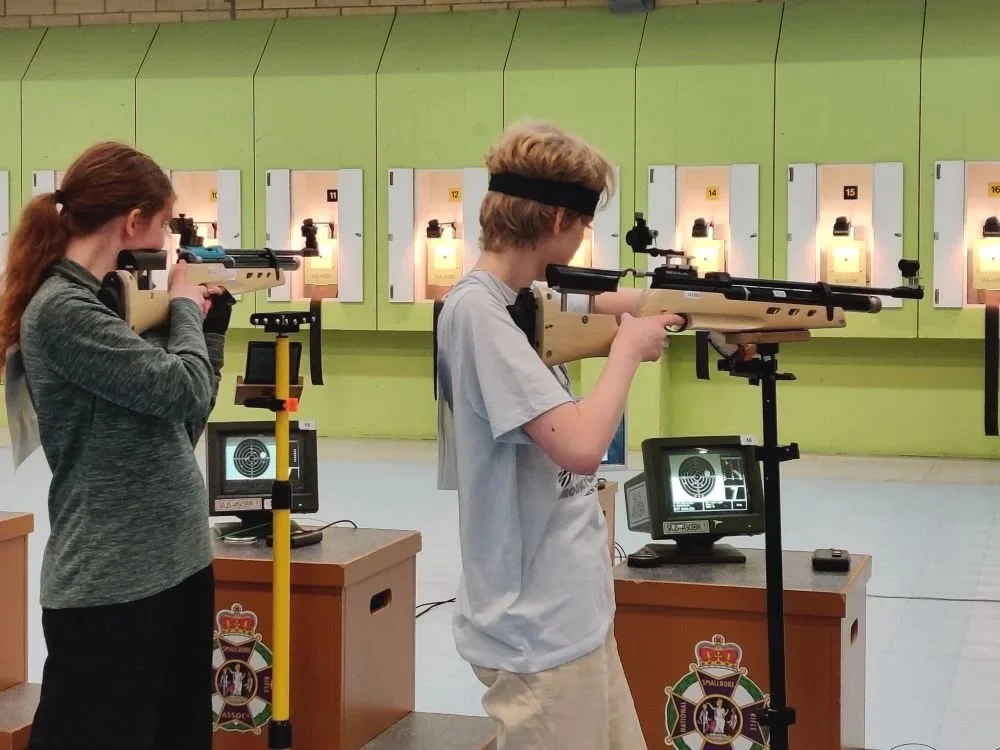
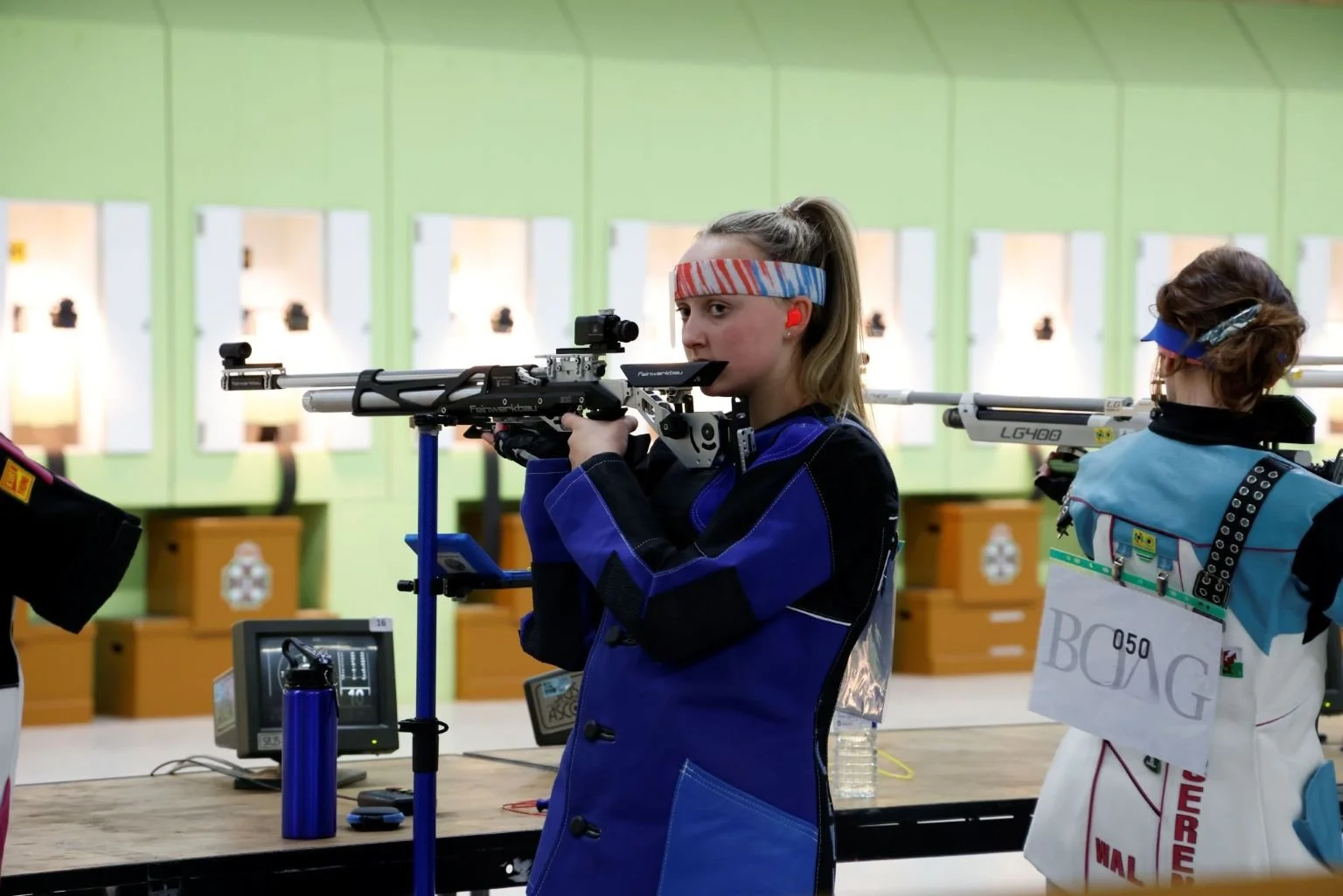
10m Air Rifle – a more advanced discipline that needs extra kit, such as a shooting jacket and trousers, if you want to take it seriously. However, there’s no need to buy this straight away, and there’s a good second-hand market for equipment.
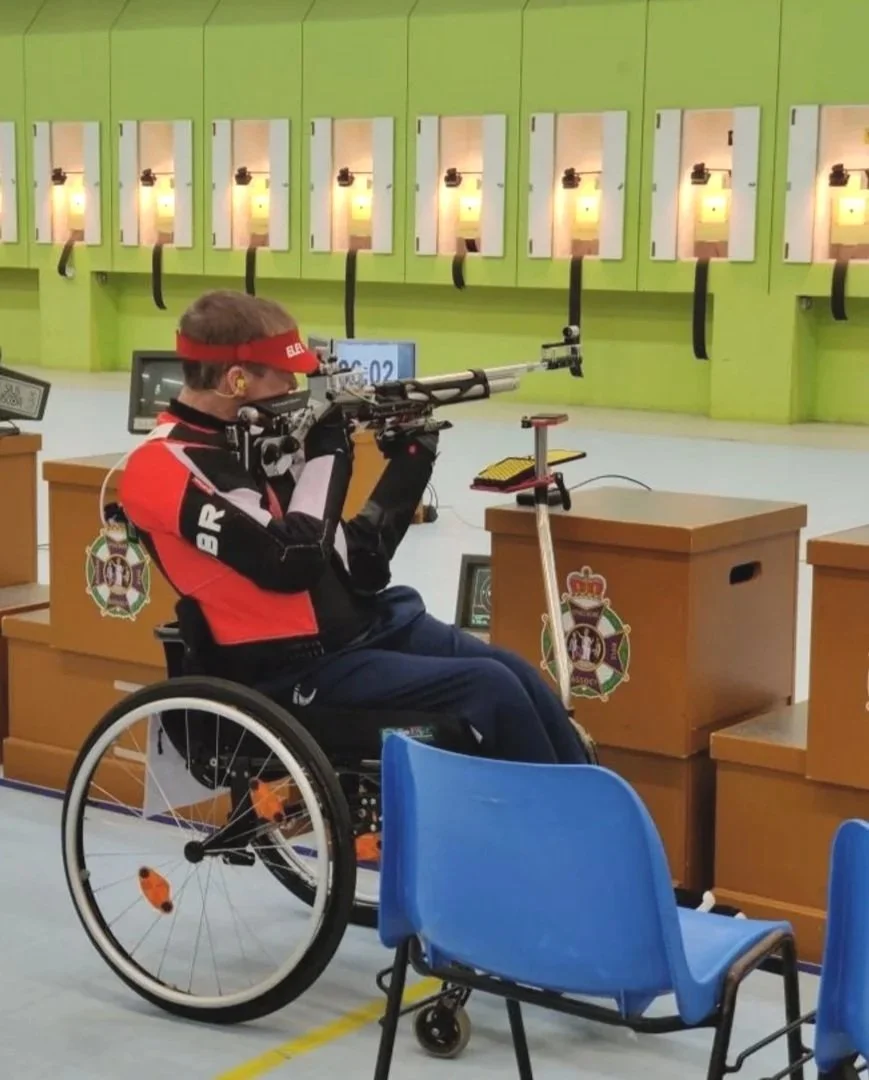
Air rifle is very inclusive – welcoming all ages and abilities. Many facilities offer disabled access, so it’s a great sport for everyone.
There can be a lot of jargon in target shooting, and at first it might feel like a foreign language – but don’t let that put you off! We’ve created a simple Jargon Buster to help you get started. Our community is friendly and always happy to answer questions, so never hesitate to ask.
Air Rifle Basics
Good shooting technique is essential for achieving good results. Like most skills, it’s best to start simply and progress gradually.
At many clubs you will start shooting from a bench, as it’s easier to learn the basic skills:
Begin by shooting with both elbows resting on the bench. This gives a stable platform for your first shots. From this position, you can learn to aim the rifle, breathe correctly, operate the trigger and follow through. Once you’ve mastered these skills, you can move on to the standing position.
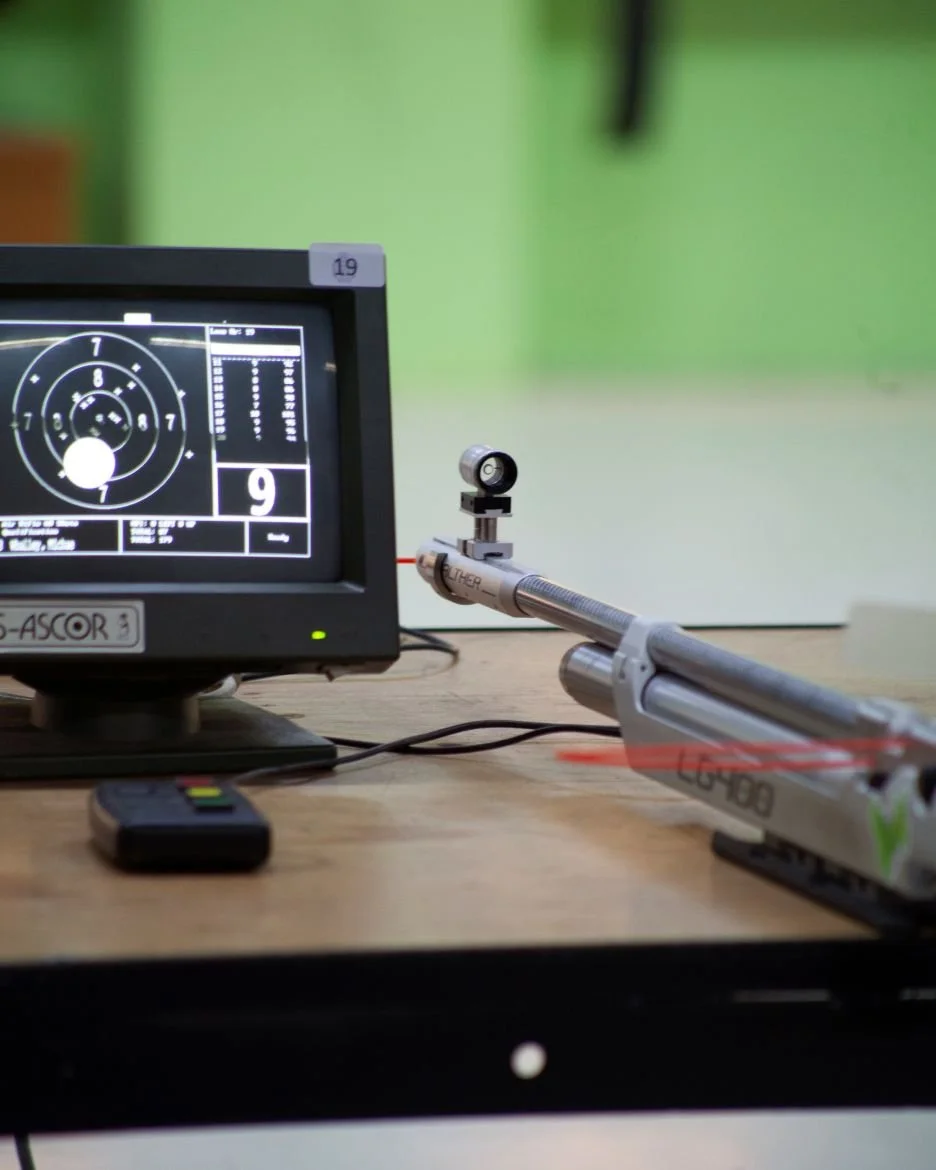
Focus on grouping not just the score:
Most beginners want to hit the centre of the target even if it’s just with the odd shot now and again. Instead, aim for consistency – how close together your shots land. This scatter of shots is called a group. The smaller the group, the better you’re shooting.
Finding Your Dominant Eye
Your dominant eye is important for aiming and may not match your dominant hand. Here’s how to find it:
Make a hole in a piece of paper about 20mm wide.
Hold the paper at arm’s length and look through the hole at an object with both eyes open.
Slowly bring the paper towards your face while keeping your focus on the object.
When the paper reaches your face, you’ll notice you’re looking through the hole with one eye – that’s your dominant eye.
Once you have found your dominant eye, it’s often best to use this to aim and it may mean learning to shoot with your less dominant hand to operate the trigger.

Breathing
Controlled breathing is key to a steady shot. The best time to shoot is during a short breath-hold after exhaling – ideally no longer than 10 seconds. Take a few normal breaths between shots to keep your heart rate steady and your aim stable.
Basic Stance
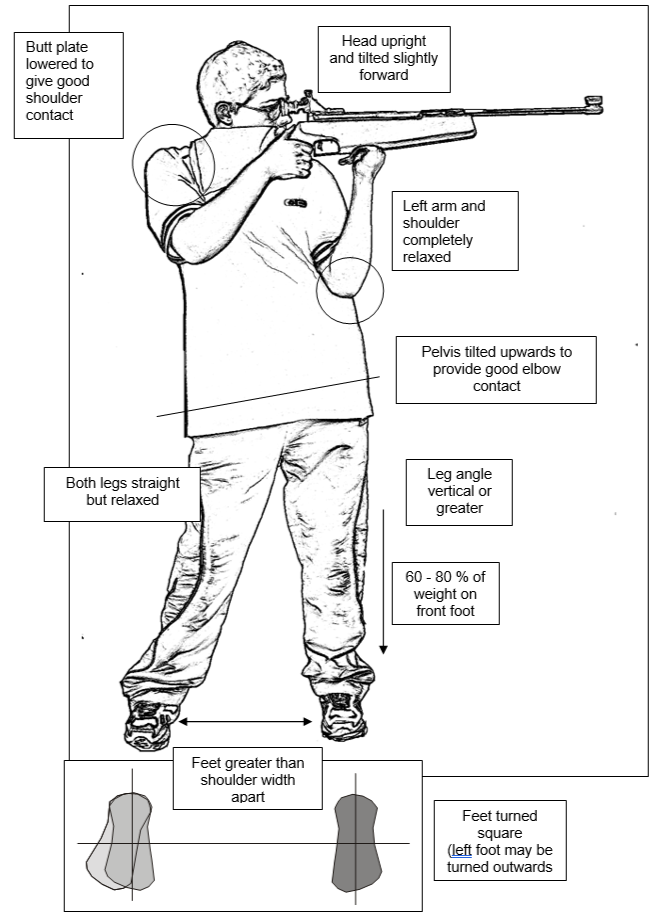
The standing position is the most demanding of the shooting positions. It uses more muscles to keep the body still, so it takes practice.
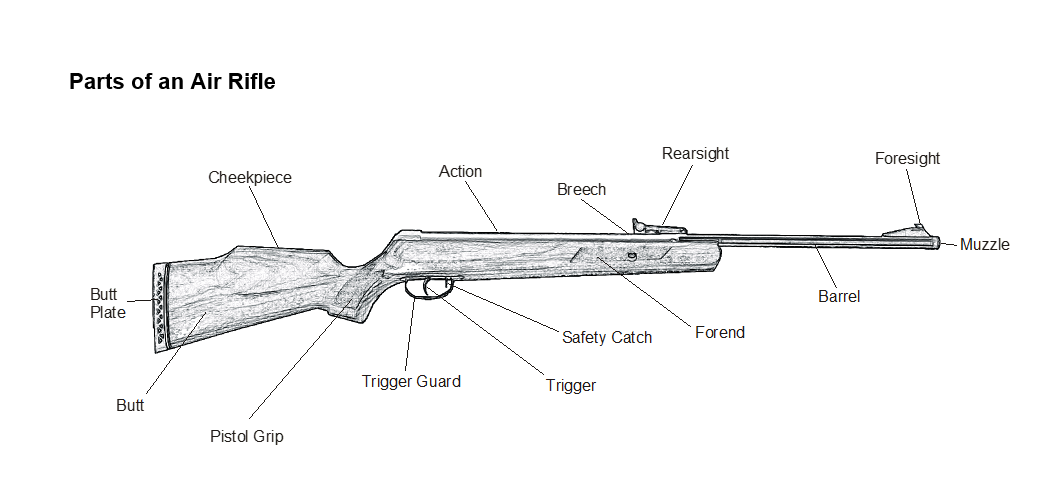
Start with a technically correct position, then adjust it over time to suit your body. You can see the example image here shows a right-handed shooter. A rifle is made up of different parts, here is an image covering some of the key terminology to know
Tip: Hold your position for 1–3 seconds after the shot (known as follow-through). This means you don’t disturb your aim before the shot has left the rifle.
Basic Range Etiquette and Safety
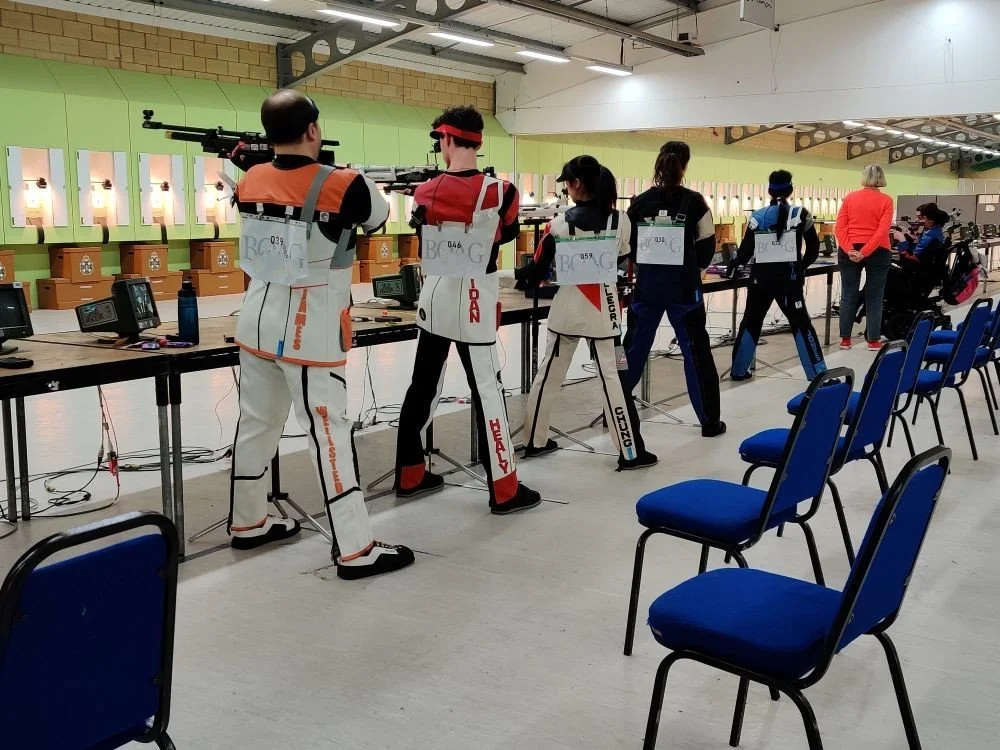
Safety is the top priority at any range. Here are some of the golden rules:
Never point a gun at anyone.
Always treat a gun as if it’s loaded.
Make sure your gun is unloaded when not in use but still keep it pointing in a safe direction.
Only load the gun when on the firing point.
Keep the gun pointing downrange at all times, including when loading and unloading.
Never go past the firing point without permission from a range official.
Never handle guns when anyone is in front of the firing point.
Do not distract shooters on the firing point. Wait until their gun is safe before approaching or talking to them.
Other things to know:
Ranges have Range Officers who keep everyone safe. Always follow their instructions and ask if you’re unsure.
If you hear the command “Stop”, obey immediately.
Pellets are made of lead, which is poisonous. Wash your hands after handling them. Do not ingest pellets and take care when cleaning the range. Goggles and a mask are recommended for cleaning tasks.
Targets are a series of concentric circles that each have a set value. We do not use targets with people or animals on them, and we do not use metal items (like tin cans) for safety reasons.
We hope you enjoy your experience with air rifle target shooting and find it a fulfilling and rewarding sport.
If you’d like more information, please explore the rest of the pages in our Get Involved section or get in touch with us – we’re always happy to help.
Email: info@nsra.co.uk
NSRA Bisley Phone: 01483 485 500
NSRA Aldersley Phone: 01902 757610
You can check out some ‘Try a shoot’ information here:
Had A Taster Session And Hungry For More?
We have a great target shooting proficiency program and you don’t have to be a member to take part!
Many of our Affiliated Clubs welcome new shooters and are happy to help you get started! You can find a Club near you with our Club Finder