
New To Target Shooting? Here’s Our Jargon Buster
Starting a new hobby is exciting, but they all come with their own language which can take time to learn. Get ahead of the game with a few basic terms in this jargon buster!
This doesn’t cover all terminology, just a few of the basics to get you started.
General Terms and Acronyms
Small-bore Rifle: A rifle that fires .22LR calibre ammunition, typically used at 25 or 50 yards/metres.
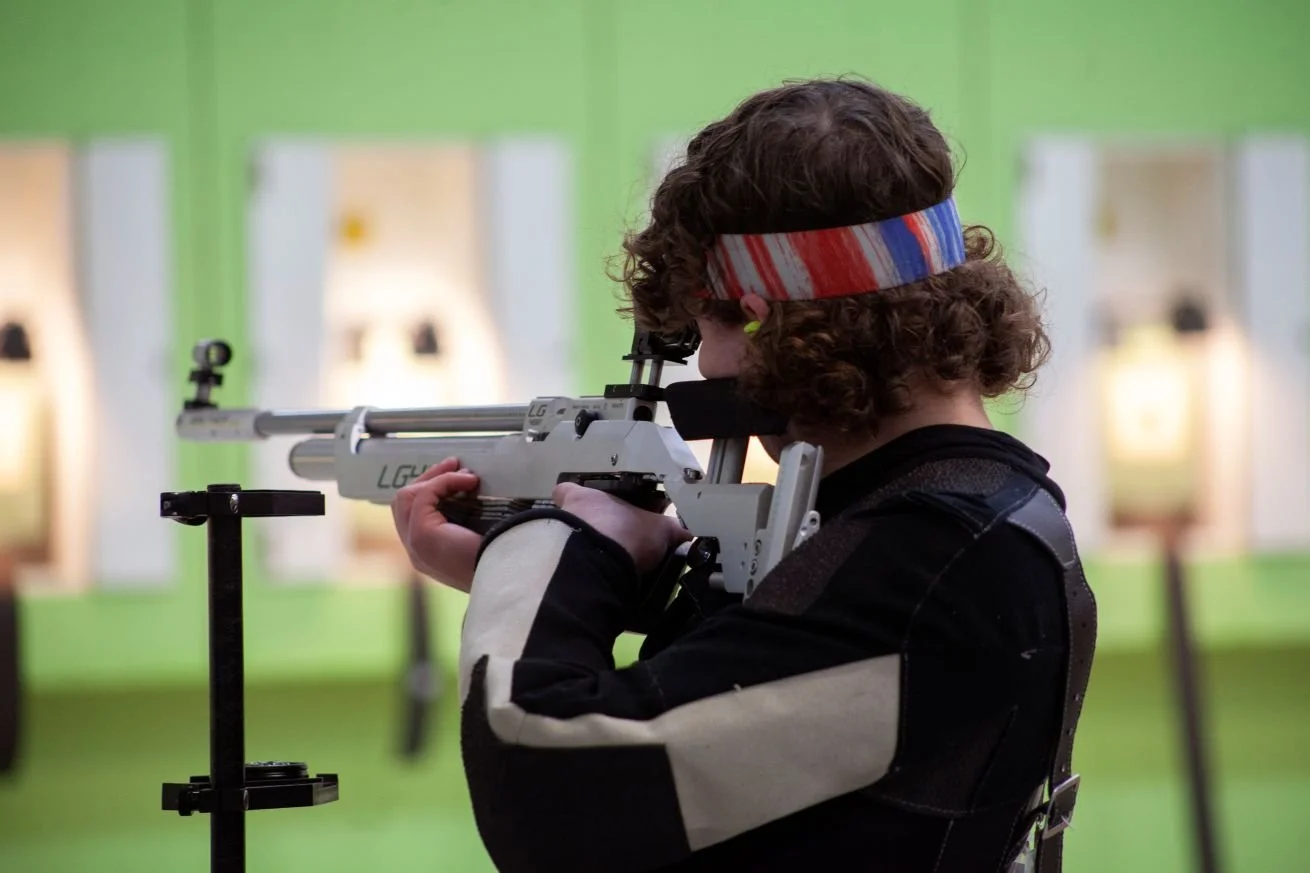
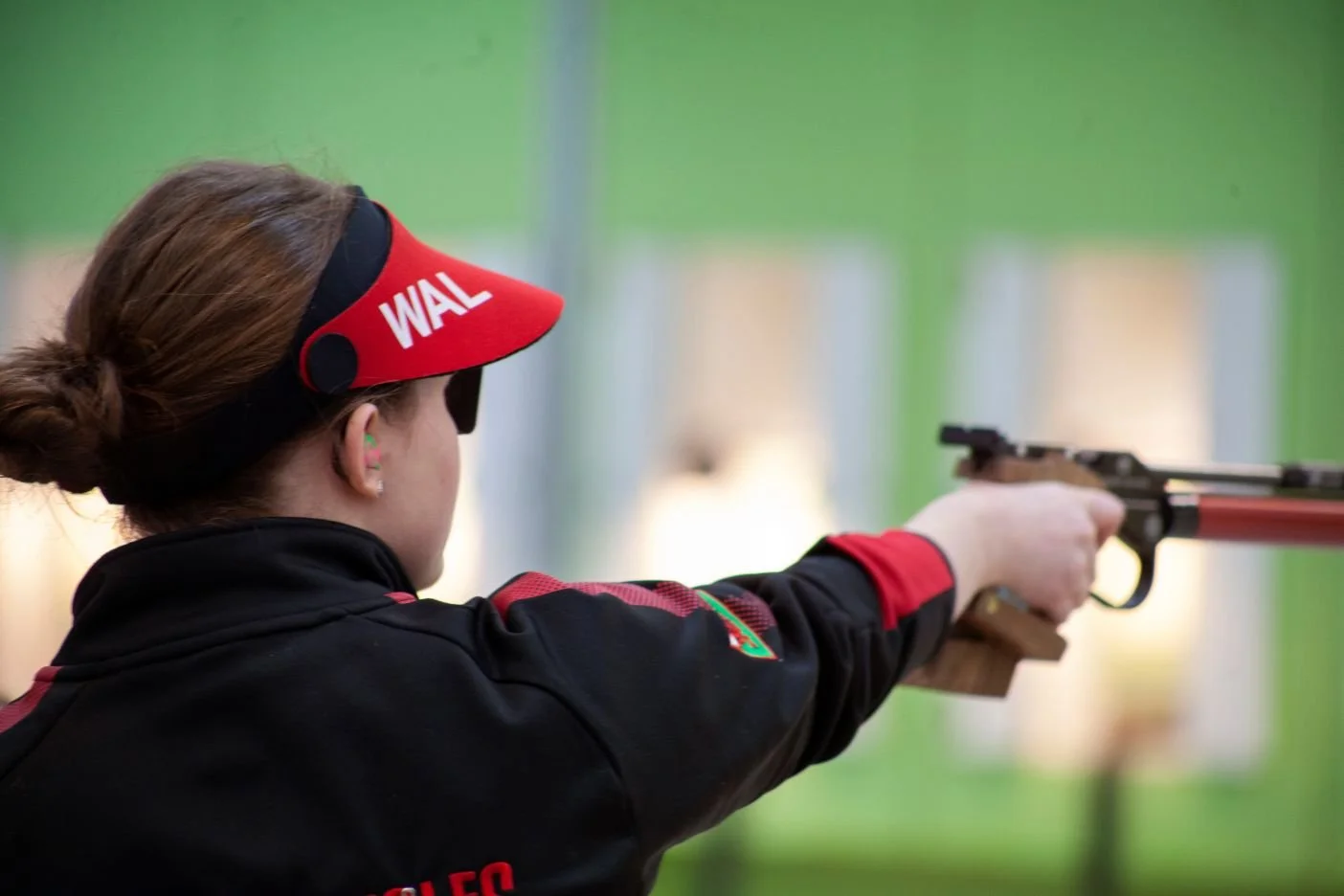
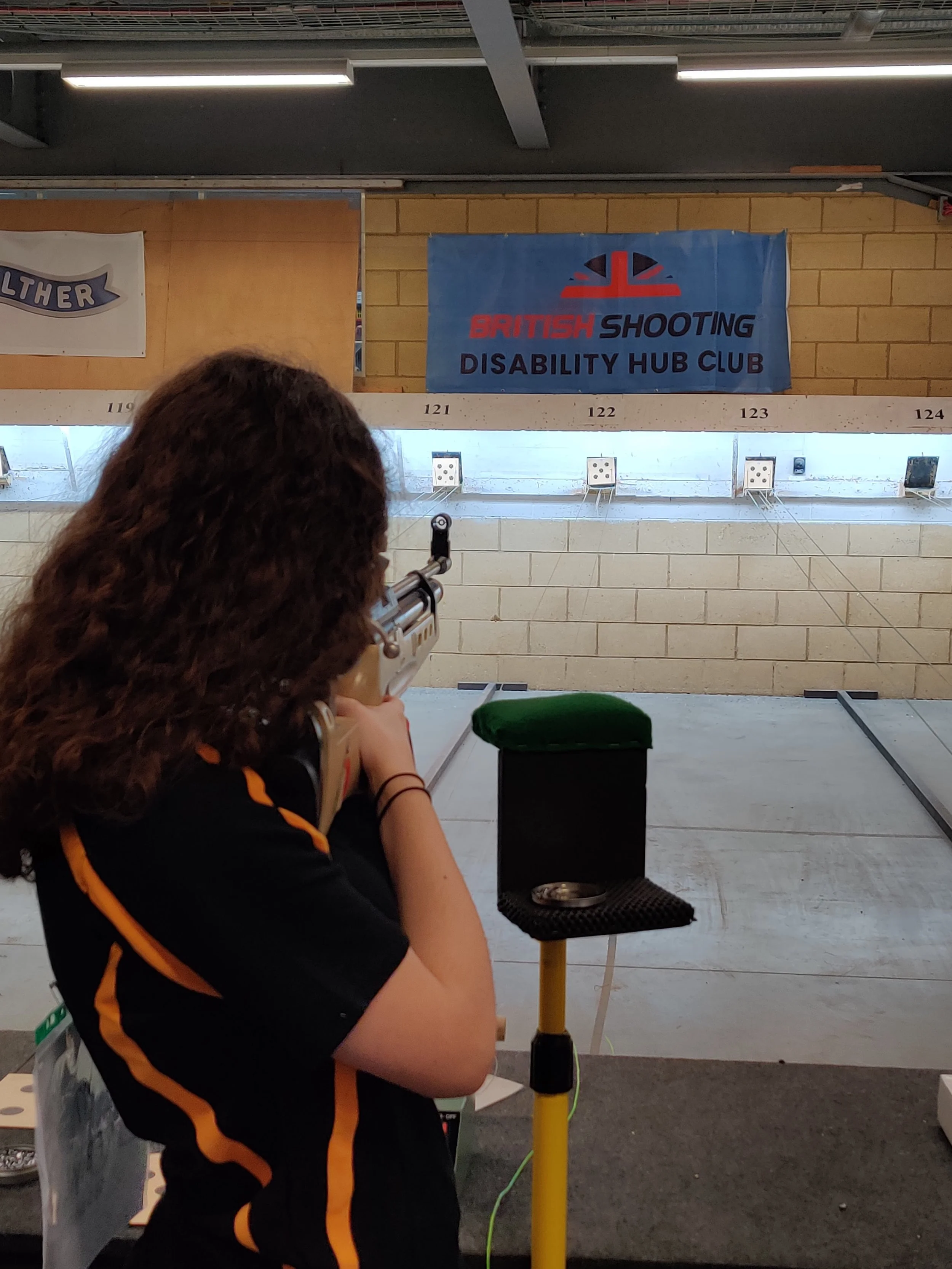
Air Rifle / Air Pistol: Guns powered by compressed air or CO₂, generally used at distances between 6 and 55 yards.
Discipline: Each of the different types of target shooting is its own discipline e.g. 10m Air Pistol = one of the target shooting disciplines.
Prone: A rifle shooting position where you are laying on your stomach.
3P: Stands for 3 Position and is a term for one of the disciplines (e.g. 50m 3P Rifle) where you do an equal number of shots in each of the 3 positions of Standing, Kneeling and Prone.
Shooting Jackets and Trousers: Used for 10m Air Rifle competition and for 50m Rifle competitions. Specialist items that have stiffened areas to assist with stability and support.
NSRA: National Small-bore Rifle Association, the National Governing Body for small-bore rifle, airgun, and crossbow shooting in the UK.
NGB: National Governing Body, responsible for overseeing a sport.
ISSF: International Shooting Sport Federation – governing body of Olympic shooting events.
Range: A designated area where shooting takes place. Can also mean the distance from the gun to the target.
Target: The object or paper card used to aim at and score points.
Airgun: A gun that uses compressed air or gas to shoot pellets.
Calibre: The diameter of the pellet or bullet.
Holdover: Used to compensate for the pellet or bullet drop over distance. The act of aiming higher than the target to account for the projectile arc. When using a telescope sight this is often described in mil-dots which are the spacings between dots or lines on the scope reticle, seen when you aim.
Holdunder: The opposite of holdover. The act of aiming lower than the target to account for the projectile arc.
Zeroed / Zeroing: Zeroing is adjusting the rifles sights or scope so that the point of aim matches the point of impact at a specific distance. Once complete this is called zeroed, as in “my rifle is zeroed to 25m” You can then apply holdover or under more accurately once you understand your rifles zeroed distance.
Plink (or Plinking): Non-competitive shooting - shooting at a target, often a metal silhouette which gives off a ‘plink’ sound when the target is hit.
Firing Point: The specific spot where a shooter stands or lies to shoot.
Shoulder-to-Shoulder: Refers to in-person competitions where shooters are positioned next to each other on the firing point.
Dry Fire: Firing an unloaded gun to practise technique, used as part of training or pre-competition preparation.
Ears: Refers to hearing protection which is recommended when shooting or on the range.
Firearms Certificate FAC: A legal permit required to own a firearm or an air rifle 12 foot-pounds.
Breech Flag or Empty Chamber Indicator (ECI): The safety equipment used for firearms to ensure they are safe (unable to fire).
Safety Cord: The safety equipment used for air guns to ensure they are safe (unable to fire). This normally comprises a piece of coloured plastic cord that is put through the barrel and can be seen protruding from both ends of the barrel.
Some of the Many Disciplines
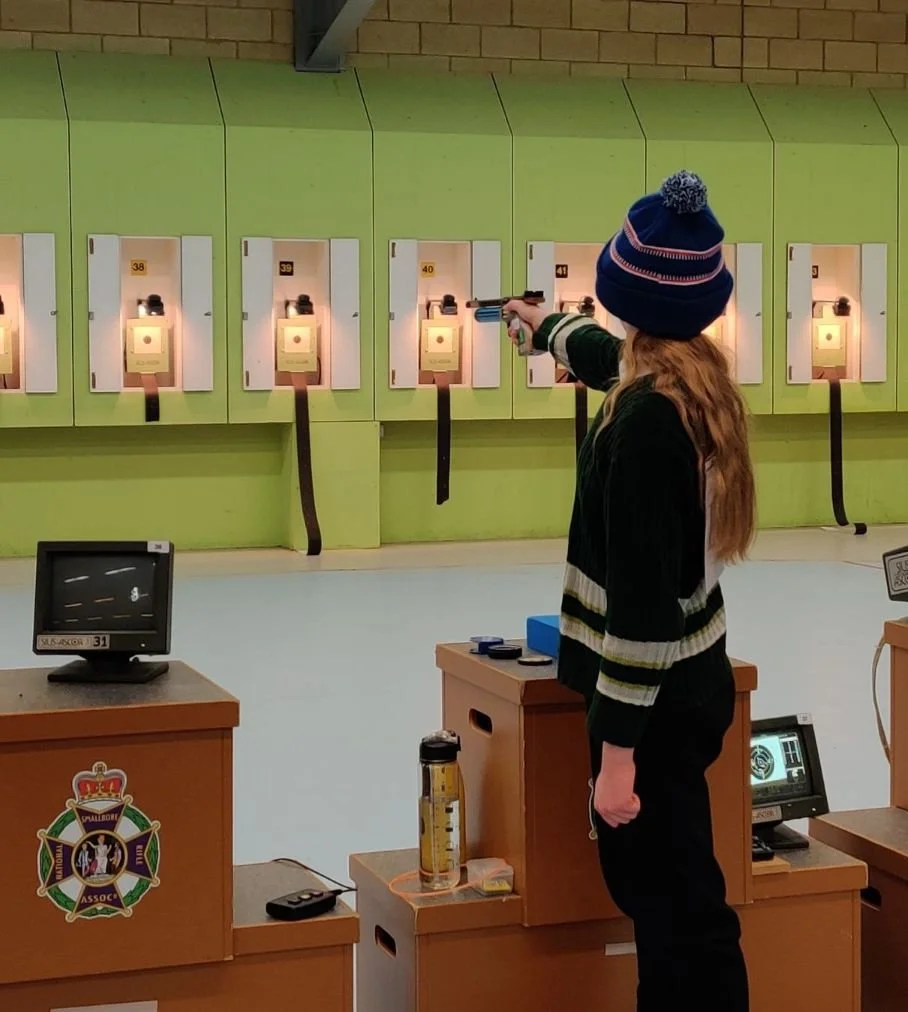
10m Air Pistol: This is done standing up, the target is 10m away, can be done with minimal equipment. One of the most affordable routes into target shooting, it’s also an Olympic & Paralympic event.
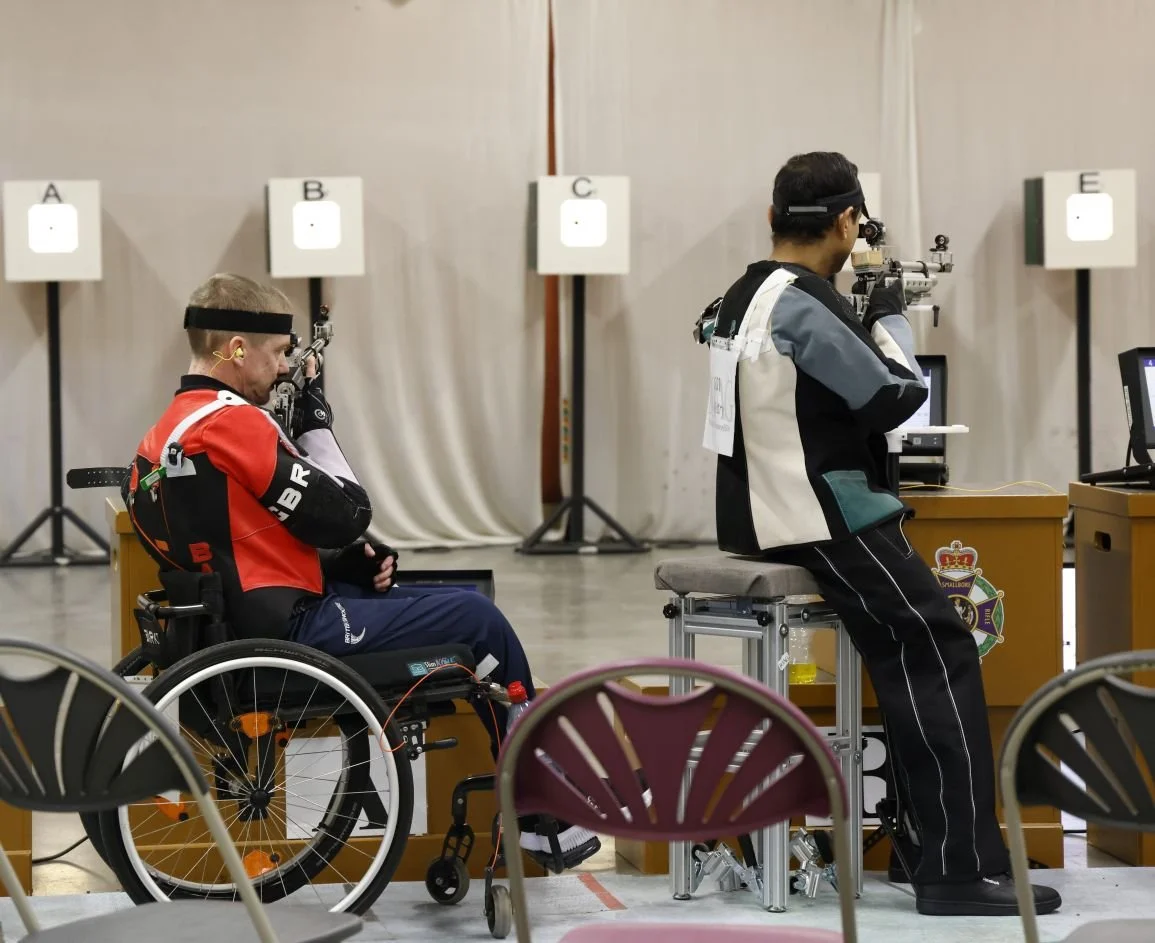
10m Air Rifle: This is done standing up, the target is 10m away, requires a shooting jacket and trousers. This is also an Olympic & Paralympic event.
Sporter Rifle: This is done standing up, the target is 10m away for most competitions but can also be shot from 6 yards. It requires minimal equipment, is very popular with the Scout Association and is an affordable route into target shooting.
50m Prone: This is done laying on your stomach in a stable shooting position for you. Requires a shooting mat, jacket and trousers and is a small-bore discipline. This is also a Paralympic event.
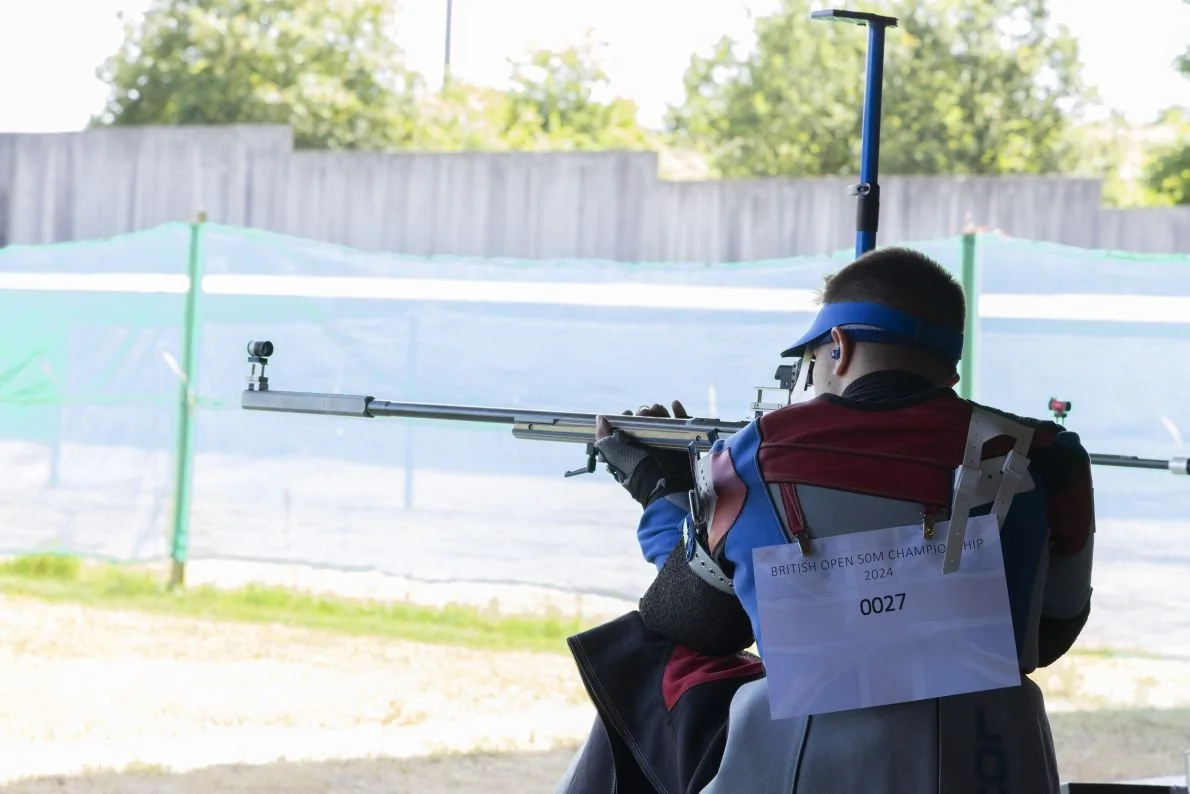
50m 3P: This is done with an equal number of shots over the 3 shooting positions of Standing, Kneeling and Prone. Requires a shooting mat, jacket and trousers and is a small-bore discipline. This is also an Olympic & Paralympic event.
25m Pistol: Shot at 25m and done standing up, this is also an Olympic and Paralympic event and a small-bore discipline.
50m Pistol: Shot at 50m and done standing up, this is a small-bore discipline.
Target Sprint: This is a hybrid discipline combining running and air rifle shooting (though not at the exact same time). Rifles are left in an individual rack next to the shooters firing point. They are required to shoot a series of 5 small metal plates then run for a designated distance (usually 400m) that leads them back to the firing point for the next round of shooting. This is repeated several times then combined running and shooting scores decide the winner. This is an affordable route into target shooting.
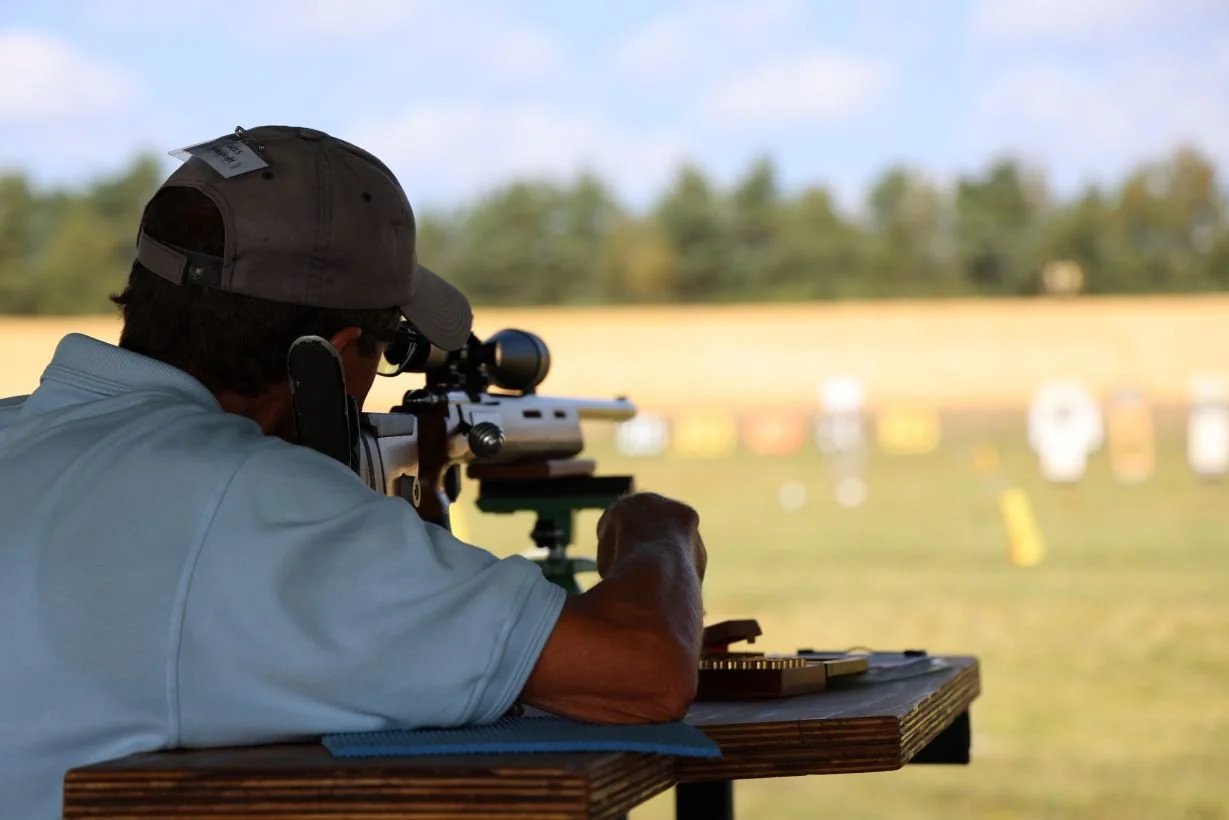
Benchrest: A discipline where the rifle is rested on a support for precision shooting, can be shot at different distances and with both air and small-bore.
Bell Target: The challenge is to make the bell ring! The bell is rung by firing a shot through a small hole in a metal plate, needing very precise aim. Challenging to do but satisfying to hear the ding of the bell. This is done mainly with air rifle but occasionally with air pistol. This is an affordable route into target shooting.
Visually Impaired (VI) Shooting: Using adapted equipment that relies on sound (a series of beeps) to indicate the location of the bullseye, enabling people without sight or with sight impairments to shoot.
Crossbow: A crossbow consists of a horizontal bow mounted on a stock similar to a rifle that shoots short projectiles called bolts. These are shot at distances from 6yds, both indoors and outdoors.
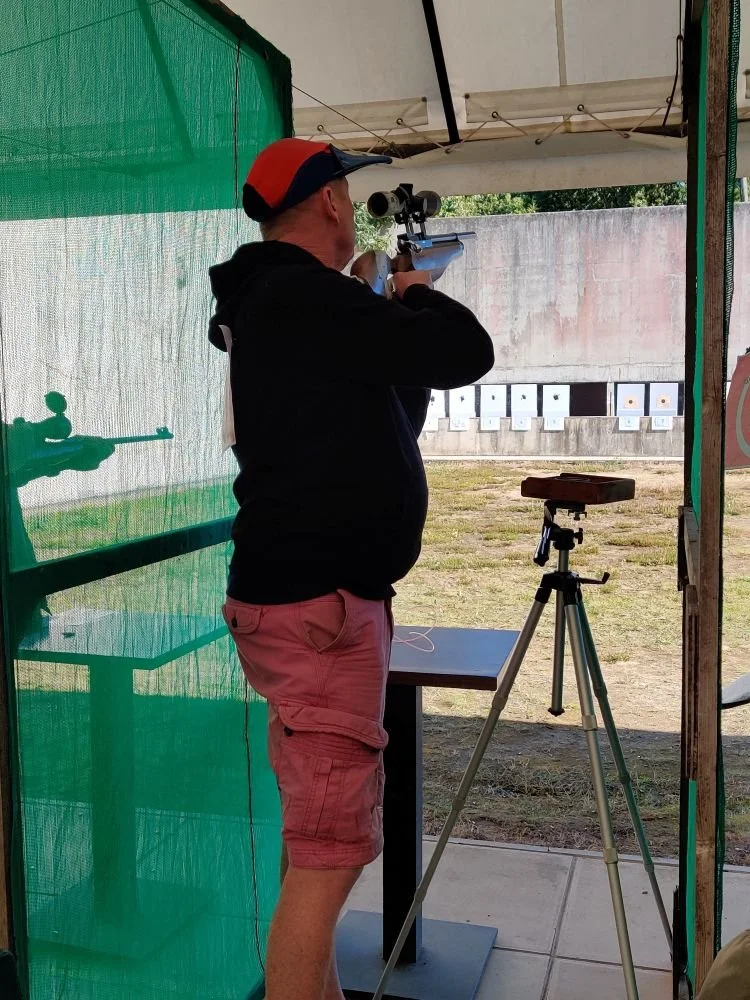
Field Target: This is done usually as an outdoor course at various unknown distances using an air rifle, shooting at metal targets. Scopes are permitted and adjustments can be made during the course. Any shooting position is valid for the majority of the event, but most people shoot from the sitting position. The emphasis is on judging distance and wind variations by eye and using holdover or under to hit the target. This can be competed up to World level. Requires minimal equipment and is an affordable route into target shooting but is highly technical to learn.
Hunter Field Target: This is done usually as an outdoor course at various distances using an air rifle, shooting at metal targets sometimes elevated or partially hidden to simulate hunting. Scopes are permitted but no adjustments can be made once the course begins. Shooters must touch a peg, that has been positioned at each firing point, while shooting. Any shooting position is valid. The emphasis is on judging distance and wind variations by eye and using holdover or under to hit the target. This can be competed up to World level. Requires minimal equipment and is an affordable route into target shooting.

On The Range & Safety Commands
Range Officer (RO): The person responsible for safety and order on the shooting range.
Range Commands: Instructions to the shooters on the firing point
Cease Fire: Stop shooting immediately.
Load: Command to load the firearm.
Commence Fire: Start shooting.
Clear: Ensure the firearm is unloaded and safe.
Competition & Scoring
Course of Fire: A specific set of instructions and conditions that define how a shooting match will be conducted, including number of shots fired, distance, shooting position and target type.
Card: A paper target used in competitions.
Backer: A secondary target placed behind the main one to detect cross-shots or verify hits.
10-Bull Card: A target card with 10 individual aiming marks.
Sighter Shots: Practice shots taken before scoring begins to check aim and adjust sights.
Bullseye: The centre of the target, usually worth the highest score.
Series: A set of shots fired in a competition.
Group or Grouping: A cluster of shots on a target. A measure of how close together a series of shots are on the target. Tight grouping = good consistency.
Score: The total points achieved from hitting the target.
Class: The skill level of the competitor – “they are in Class A”
X: The innermost ring on some targets, used for tie-breaking in precision scoring.
Decimal Scoring: Used in some air disciplines; scores are given in tenths of a scoring ring (e.g., 10.9 is a perfect shot).
Shoot-off: A tie-breaker round between competitors with equal scores.
Relay: A group of shooters firing during the same time slot in a competition. Also known as a detail.
Wind Flags: Small flags on poles that are placed on an outdoor range to assist with judging wind direction and strength
Equipment Control: A designated area at high level competitions where equipment is checked by an authorised person, to ensure it complies with the competition rules. This is done before the competitor shoots, so they have time to make any changes, if needed, before their competition.
Equipment & Setup
Pellets: Ammunition used in air rifles and pistols.
.22 Long Rifle (LR): Small-bore cartridges used in rifles & pistols. Requires a firearms certificate to purchase
Sling: A strap used to support the rifle in kneeling & prone shooting.
Stock: The part of a rifle to which the barrel and mechanism are attached, that is held by the shooter with both hands and rests against the shoulder for stability.
Pistol Grip: On a rifle, the part of the stock held by the trigger hand. Similarly on a pistol, the part of the gun that is held.
Blinder: Patch over the non-aiming eye.
Scoring Gauge: A device to accurately score holes in a paper target.
Butt Plate: The section at the end of the stock that fits in the shoulder. These are often adjustable and play a key role in stability and comfort during shooting.
Cheekpiece: The part of the stock that the shooter rests their cheek on. These can be adjustable to fit the shooter.
Barrel: The long metal tube through which the projectile travels when fired. Precision barrels are key to accuracy.
Muzzle: The end of the barrel where the pellet or bullet exits.
Fore-end: The front part of the rifle stock, often where the hand or rest is placed.
Shooting Mat: A padded mat used when shooting prone.
Positions & Technique
Prone: Lying down position, often used in .22 rifle shooting.
Standing: Shooting while standing—used in air rifle, air pistol & small-bore disciplines.
Kneeling: A shooting position where one knee is on the ground and the shooter sits on the other foot.
Follow-through: Maintaining position and focus after the shot is fired to ensure consistency.
We hope you enjoy your experience with target shooting and find it a fulfilling and rewarding sport.
If you’d like more information, please explore the rest of the pages in our Get Involved section or get in touch with us – we’re always happy to help.
Email: info@nsra.co.uk
NSRA Bisley Phone: 01483 485 500
NSRA Aldersley Phone: 01902 757610
You can check out some ‘Try a shoot’ information here:
Had A Taster Session And Hungry For More?
We have a great target shooting proficiency program and you don’t have to be a member to take part!
Many of our Affiliated Clubs welcome new shooters and are happy to help you get started! You can find a Club near you with our Club Finder